

As we close the books on 2025, I’m reflecting on what’s been one of the most transformative years in Australian commercial property since the global financial crisis.
After three years of uncertainty, elevated interest rates, and cautious investor sentiment, we’ve finally seen the market turn a corner. While the recovery remains selective and uneven across sectors and locations, the foundations for sustained growth in 2026 are firmly in place.
From my position as a commercial finance broker working with business owners and investors across the country, I’ve had a front-row seat to these shifts. This year brought genuine relief after an extended period of adjustment, and I want to share what I’ve observed across our major markets, what trends defined 2025, and what I’m expecting as we head into the new year.
The Big Picture: A Market Finding Its Footing
The Australian commercial property market recorded $59.9 billion in transactions across 7,754 sales during the 2024/25 financial year. While transaction volumes dropped by 18.5% compared to the previous year, dollar values remained stable with only a marginal 0.3% decline. This divergence tells an important story: institutional and high-net-worth investors stayed active throughout 2025, but smaller private investors remained cautious, particularly in the first half of the year.
What changed the sentiment? Three Reserve Bank of Australia rate cuts delivered genuine relief to borrowers and investors alike. The RBA cut rates in February (to 4.1%), May (to 3.85%), and August (to 3.6%), before holding steady up to today’s December meeting. These cuts marked a decisive shift from supporting inflation control to supporting economic growth, and the commercial property sector responded accordingly.
By the second quarter, I noticed a tangible shift in client conversations. The paralysis that had gripped decision-making throughout 2023 and early 2024 began to lift. Enquiries increased, due diligence timelines shortened, and buyers who had been sitting on the sidelines started making offers.

Sector Performance: Winners and Surprises
Retail’s Remarkable Comeback
If someone had told me at the start of 2024 that retail would be the standout commercial property performer in 2025, I wouldn’t have believed them. Yet here we are. Retail delivered a robust 5.73% total return in Q1 2025, driven by strong income returns and minimal capital decline. Sub-regional retail centres led the charge with an exceptional 8.34% total return, followed by regional centres at 6.74%.
The retail revival reflects successful adaptation to changing consumer behaviours, limited new supply, and continued population growth driving improved occupancy rates. Sydney emerged as the standout retail performer, boasting the lowest CBD retail vacancy rate of just 3.9% across all asset sub-sectors. Even Perth’s retail market showed remarkable strength, with the annual median sale price per square metre increasing by 23.8% to $5,238 by March 2025.
I’ve arranged finance for several retail property acquisitions this year, and the common thread has been owners recognising that bricks-and-mortar retail isn’t dead; it’s just evolved. Properties with strong entertainment components, food and beverage tenancies, and experiential offerings are commanding premium prices and rents.
Industrial: Steady but Moderating
Industrial and logistics remained the workhorse of commercial property in 2025, though the explosive growth of previous years has moderated. National prime average weighted net face rents increased by 2.6% quarter-on-quarter to $209 per square metre in Q1 2025, but annual growth slowed to 7.6%, the lowest rate since Q4 2021.
Perth’s industrial market emerged as Australia’s tightest, with vacancy sitting at just 2.0%. Adelaide and Perth both recorded double-digit annual rental growth in certain precincts due to acute supply-demand imbalances. However, Melbourne saw 64.3% of quarterly supply hit the market, while Sydney recorded its lowest quarterly completion figure since 2015 at just 43,238 square metres.
The divergence between markets became stark. I worked with several clients looking at warehouse facilities in Sydney’s outer west and west Melbourne, where higher supply levels are creating opportunities for buyers, while tighter markets in South Sydney and East Melbourne continued to command premium pricing.
Office: A Tale of Two Markets
The office sector remained the most challenging in 2025, though green shoots of recovery became visible in premium-grade assets. Australia’s CBD office vacancy rate climbed to 14.3% by mid-year, the highest level since the mid-1990s. However, this headline figure masks significant underlying shifts.
We’re witnessing an unprecedented flight to quality. Prime-grade office buildings in core CBD precincts attracted strong leasing activity and rental growth, while B, C, and D-grade assets saw vacancy rates push beyond 20% in several submarkets. Corporate Australia’s focus on workplace experience and sustainability credentials transformed from a nice-to-have into a non-negotiable requirement.
I arranged office building loans for several owners this year, and the conversations were telling. Properties without strong ESG credentials, modern amenities, or prime locations faced genuine challenges in both leasing and valuation. Meanwhile, certified green buildings in Melbourne Docklands secured lease rates 8% above comparable stock, reflecting both operational cost savings and reputational benefits for tenants.
City-by-City Performance
Sydney: Leading the Recovery
New South Wales continued its dominance of Australian commercial property investment, attracting $25.8 billion in transactions, representing 43.1% of total national activity. While this represented a modest 1.5% increase in dollar volume, transaction numbers declined by 7.2%, confirming the trend toward larger, institutional-grade asset deals.
Sydney’s CBD office vacancy increased from 11.6% to 12.8% as 164,552 square metres of new supply hit the market, well above the historical average. However, positive demand remained strong, and core CBD office assets began showing signs of recovery by year’s end. I noticed rental growth accelerating in premium buildings, particularly those with strong sustainability profiles and proximity to major transport hubs.
The retail sector was Sydney’s standout performer, with CBD retail vacancy dropping significantly. Industrial assets in South Sydney maintained tight vacancy levels despite new supply in the outer western corridors.
Melbourne: Stabilising After Decline
Melbourne’s market demonstrated resilience despite continued challenges. The CBD office vacancy rate held steady at 18%, though this masks significant variation between prime Eastern Core locations and secondary buildings. The city experienced a 27% decline in office values since the 2022 peak, but transaction activity picked up through the second half of 2025.
What encouraged me most about Melbourne was the stabilisation we saw in retail and industrial sectors. Sub-regional retail centres showed strong performance, and while industrial vacancy increased due to substantial new supply, quality assets in East Melbourne maintained their appeal.
Melbourne’s price growth over the past five years has been the slowest among major cities at just 20.6%, creating opportunities for buyers willing to take a long-term view. Several of my clients acquired well-located Melbourne assets at what I believe will prove to be cyclical lows.
Brisbane: Tight Market, Rising Rents
Brisbane’s commercial property market remained one of the nation’s strongest throughout 2025. The CBD office vacancy rate stayed below 11% despite new supply, significantly outperforming other major markets. Strong demographic growth, business relocations from southern states, and Olympic infrastructure investment all supported demand.
Industrial vacancy in Brisbane tightened as the Trade Coast precinct continued to attract logistics and distribution operators. The city’s retail market also performed solidly, benefiting from continued interstate migration and population growth exceeding 2.5% annually.
I’ve noticed increasing interest from interstate investors looking at Brisbane opportunities, particularly in industrial and office assets where yields remain attractive relative to Sydney and Melbourne.
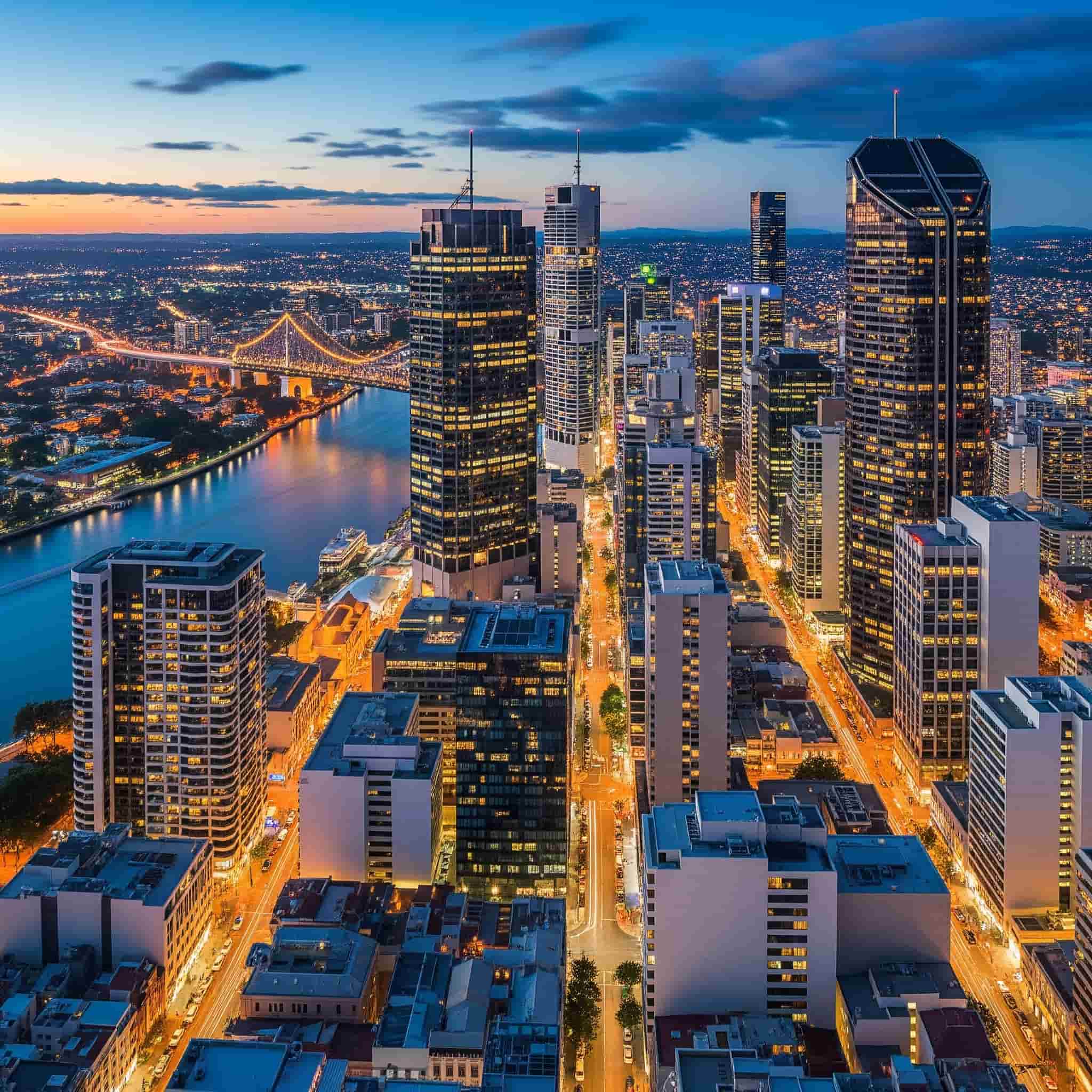
Perth: The Economic Powerhouse
Western Australia entered what many analysts are calling a new commercial property super-cycle. Perth led all major cities on core economic variables including economic growth, population growth, and employment growth over the past five years. The CommSec State of the States report consistently ranked WA as the nation’s economic frontrunner throughout 2025.
Perth’s industrial market became Australia’s tightest, with vacancy at just 2.0%. The CBD office vacancy rate improved despite new supply as 12 tenants over 500 square metres relocated from suburban locations back to the CBD in 2025 alone. All settled in A-grade or B-grade buildings, driving prime-grade vacancy down from 18.1% to 15.1%.
Office rents responded accordingly, climbing 5.1% year-on-year, with forecasts projecting rental growth of at least 25% over the next five years as a step-change in rents occurs from mid-2026 onwards. Retail properties saw the annual median sale price surge by 23.8%.
What particularly interests me about Perth is the economic diversification occurring. While traditional resources remain important, the state is transitioning toward critical minerals, value-add processing, and defence sectors. This provides genuine long-term demand drivers for commercial real estate beyond the traditional boom-and-bust mining cycles.
Adelaide: The Consistent Performer
Adelaide maintained its reputation as a steady, reliable market throughout 2025. Strong net absorption of over 22,000 square metres in the first half reduced the CBD office vacancy rate to 15.0%, down from 16.4% in July 2024. Prime-grade vacancy fell sharply from 18.1% to 15.1% despite minimal new supply.
Industrial and retail sectors performed solidly, benefiting from population growth and affordability relative to eastern capitals. Yields in Adelaide remained attractive, with regional retail centres achieving around 7.23% compared to CBD super-prime retail at 4.75%.
I’ve arranged finance for several Adelaide acquisitions this year, predominantly from eastern states investors seeking better risk-adjusted returns. The combination of improving vacancy rates, steady population growth, and lack of new supply pipeline positions Adelaide well for continued performance in 2026.
Regional Markets: The Quiet Achievers
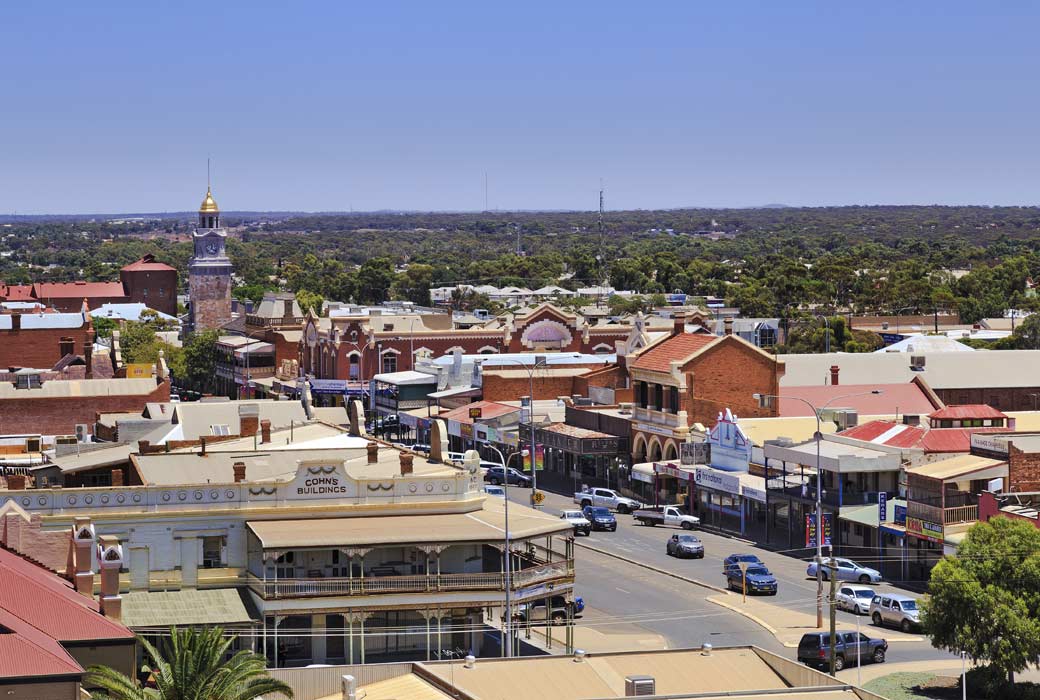
One of 2025’s most significant trends was the continued strength of regional commercial property markets. Cities like Newcastle, Geelong, Townsville, and regional Queensland centres including the Gold Coast, Sunshine Coast, Toowoomba, and Bundaberg delivered compelling risk-adjusted returns.
Regional office markets offered yields between 6% and 8%, in some cases up to three percentage points higher than capital-city CBDs. Regional retail centres achieved yields around 6% compared to 5.25% in Brisbane’s CBD and 4.75% in Adelaide’s CBD. This wasn’t just about higher yields; these markets demonstrated stronger relative fundamentals with businesses expanding beyond metro footprints due to lower operating costs, lifestyle-driven workforce shifts, and improving infrastructure.
Key Trends That Defined 2025
ESG Compliance Becomes Baseline Expectation
Mandatory climate-related disclosures that commenced in 2025 elevated corporate scrutiny of building performance. Green ratings shifted from value-add to baseline expectation. I’ve seen this firsthand in financing discussions; lenders increasingly factored in ESG credentials when assessing security values and serviceability.
The Australia Green Treasury Bond issuance in June 2024 confirmed sovereign backing for sustainable finance, spurring developers to embed net-zero features. Green bonds issued by major players like Lendlease and Charter Hall demonstrated how sustainable finance instruments lower funding costs for certified developments.
Foreign Investment Strengthened
Capitalising on a weak Australian dollar, foreign investment flows strengthened significantly. United States investors dominated acquisition activity, while Japanese capital strengthened its presence, followed by steady investment from Singapore, Hong Kong, and Canada. International buyers targeted specialised industrial assets including cold storage facilities and data centres.
Favourable exchange rates made Australian commercial properties more affordable for international buyers seeking stable returns in a politically stable environment. This contributed to the trend toward larger individual asset prices and fewer but more substantial transactions.
Return-to-Office Accelerated Quality Flight
The return-to-office mandate gained momentum through 2025, but it wasn’t a simple return to 2019 occupancy patterns. Instead, we saw accelerating demand in high-end office sectors while secondary buildings struggled. Companies prioritised workplace experience, sustainability credentials, health-certified environments, and digital connectivity.
Hybrid work patterns remain, with 36% of Australia’s workforce maintaining regular remote work arrangements. However, the office space being occupied is dramatically different: adaptable floorplates, premium amenities, and ESG compliance are now minimum requirements for attracting and retaining quality tenants.
Looking Ahead: What I Expect in 2026
As I look forward to 2026, I’m genuinely optimistic about commercial property prospects, though I expect the recovery to remain selective and uneven across sectors and locations.
Interest Rates and Capital Values
While the RBA held rates steady at their November meeting at 3.6%, what will happen next remains uncertain. Many economists expect at least one more rate cut in 2026, however today’s RBA meeting confirmed that the underlying Australian economy remains strong, and in fact a rate hike in 2026 is just as likely. Either way, I don’t currently see much reason for rates to move more than 25 – 50 basis points from current levels. This should support asset valuations for both investors and owner-occupiers.
Capital values began rising in the second half of 2025, led by industrial and retail assets. I expect this recovery to broaden in 2026, extending from core assets to a wider range of properties. Knight Frank forecasts a 20% rebound by 2030, beginning in late 2025 and continuing through 2026.
Office Market Recovery Broadens
The office recovery that began in Sydney’s core CBD and Melbourne’s Eastern Core should extend to adjacent markets through 2026. Sydney’s Midtown precinct and Melbourne’s Western Core are positioned to join the recovery as growth extends beyond the narrow band of core precincts.
Brisbane and Adelaide should see continued office market strength, supported by tight vacancy, limited new supply, and strong demographic fundamentals. Perth’s step-change in office rents will likely commence from mid-2026 as the market responds to vacancy tightening and relocations from suburban to CBD locations.
Industrial Vacancy Stabilises
Industrial vacancy should stabilise in 2026 before the next wave of growth commences in 2027. Construction lending levels are adjusting to higher vacancy, with East Coast supply forecast at 1.8 million square metres for 2026, down from 2.6 million square metres in 2024. Demand will be diverted back to pre-commitments as tenants seek to upgrade facilities.
Retail Momentum Continues
The retail sector’s momentum appears sustainable through 2026, supported by limited new supply and continued population growth. Investor demand for retail assets reached its strongest level since 2015, and with a lack of available stock relative to demand, I expect further capital value recovery.
Shopping centres with strong entertainment components, food and beverage offerings, and experiential retail should continue outperforming. The gap between prime regional centres and CBD super-prime retail may narrow as positive sentiment spills over.
Regional Markets Remain Attractive
Infrastructure improvements in regional centres will continue reshaping commercial networks. Regional office hubs, industrial parks, and retail centres should maintain their yield premium while delivering stable fundamentals. For investors seeking risk-adjusted returns, regional markets will remain compelling alternatives to premium-priced metro assets.
A Personal Note of Gratitude
As I reflect on 2025, I want to take a moment to thank everyone who made this year possible for Smart Business Plans.
To our clients: thank you for your trust, your patience during complex transactions, and your willingness to navigate a changing market with us. Whether you were purchasing your first commercial property, refinancing to improve cash flow, or expanding your investment portfolio, it’s been an absolute privilege to work alongside you. Your success is our success, and I’m grateful for every opportunity to help you achieve your commercial property and business finance goals.
To the lenders and BDMs we work with across our network of 60+ specialist commercial lenders: thank you for your professionalism, your responsiveness, and your willingness to find creative solutions for our clients. The relationships we’ve built over the years are the foundation of our success, and I don’t take that for granted. Your market insights, your understanding of different client situations, and your commitment to helping business owners succeed has been invaluable throughout this year.
The collaborative approach between brokers, lenders, and clients is what makes Australian commercial property finance work, and I’m proud to be part of this ecosystem.

Final Thoughts
2025 was the year the Australian commercial property market turned the corner. It wasn’t a dramatic V-shaped recovery, but rather a selective, measured improvement that reflects genuine underlying strength. Interest rate relief, foreign investment flows, improved sentiment, and stabilising economic conditions all contributed to this shift.
As we head into 2026, the key is maintaining perspective. Core assets in well-located markets with strong fundamentals remain attractive. ESG credentials are no longer optional. Quality matters more than ever across all sectors. And patient, well-capitalised investors who acquired assets in 2024 and 2025 are likely to see strong returns as the cycle matures.
If you’re considering commercial property finance in 2026, whether for purchase, refinancing, or development, I encourage you to start conversations early. The market is moving faster than it did 12 months ago, and the best opportunities will go to buyers who are prepared and ready to act.
Here’s to a successful 2026 for all of us in Australian commercial property.
Nadine Connell is a Commercial Finance Broker and co-founder of Smart Business Plans, a Gold Coast-based boutique commercial finance brokerage serving clients nationally across Australia. Since 2009, Smart Business Plans has arranged over $850 million in funding for 3,300+ business owners through relationships with 60+ specialist lenders.
For commercial property finance enquiries, contact Smart Business Plans at 1300 883 210 or visit www.smartbusinessplans.com.au
