
Home » Commercial Property Loans » Owner-Occupier
Owner-Occupier Commercial Property Loans
Owner-occupier commercial property loans help you stop paying rent and start building equity. We help you get the right finance from our panel of 60+ lenders so you can secure your own business premises with rates from 5.95% and up to 85% LVR.


Owner-Occupier Commercial Property Loans — Overview (Last reviewed 01 March 2026)

Rates & Terms
- Interest Rates: 5.95% - 10.05%
- Loan Terms: Up to 30 years
- Repayment: P&I or Interest Only
- Rate Types: Variable or Fixed
LVR & Deposit
- Typical LVR: Up to 85%
- Min Deposit: From 15% plus costs
- IO Premium: +0.15% - 0.30%
- Fixed Premium: +0.30% - 0.80%
Loan Amounts & Speed
- Loan Range: $500k – $100m+
- Settlement: 14-28 days
- Lender Panel: 60+ specialist lenders
- Business Age: From 2 years trading
Owner-Occupier Commercial Property Loans
Owner-occupier commercial loans help you stop paying rent and start building equity in your own premises. With financing options up to 85% of the property value, you can secure your business’s future while turning one of your biggest expenses into a valuable asset that grows with your success.
After helping hundreds of Australian business owners purchase their own premises, we know what makes the difference between approval and decline:
- Finding lenders who understand your industry and cash flow
- Getting the lowest rates without endless paperwork
- Keeping enough working capital free to run your business
Book a free 30 min consultation to see how much you could borrow and what your repayments would look like.
Who Uses Owner-Occupier Commercial Loans?

Nadine Connell
Commercial Finance Broker
Owner-Occupier vs Investment Commercial Loans
Why businesses buying their own premises get better terms
Lower Interest Rates
Save 0.5–1.5% p.a. because lenders know you're invested in the property's success. On a $2M loan, that's $20,000–$30,000 saved annually.
Higher Borrowing Power
Access 10–15% more funding. Buy a $2M property with just $300K deposit instead of $500K required for investors.
Easier Approval
Your existing rent payments prove affordability. No vacancy concerns or rental income verification required.
Tax Advantages
Claim interest as a business expense. Potential access to small business CGT concessions on sale. Simpler depreciation claims.
Better Loan Features
100% offset accounts, unlimited redraws, no penalties for extra repayments. Renovate and customise freely.
Lower Security Requirements
Lenders have lower thresholds for security requirements such as personal property guarantees.
Example Based On $2M Commercial Property Purchase
*Based on $2M commercial property purchase. Actual savings depend on your circumstances.
Owner-Occupier Commercial Loan Rates & Terms
Exclusive rates for businesses buying their own premises – Updated March 2026
Business Type |
Rate From |
Max LVR |
Key Benefits |
|---|---|---|---|
Established Business (2+ years) |
5.95% - 10.05% p.a. |
85% |
Best rates • Major banks • Offset account |
Medical & Professional |
5.95% p.a. |
95% |
Premium rates • Higher LVR • Fast approval |
Growing Business (1–2 years) |
+0.50% p.a. |
80% |
Non-bank options • Flexible criteria |
Start-up (<1 year) |
+0.75% p.a. |
70% |
Alternative lenders • Quick approval |
Owner-Occupier Advantage: Typical savings of 0.5–1.5% compared to investment property rates. Banks prefer owner-occupiers because they're considered lower risk.
"In our experience, the biggest factor affecting your owner-occupier rate isn't the property itself — it's how well your application is structured. For instance, a business with strong financials can sometimes secure rates below the published minimums, particularly if they have an existing banking relationship. However, many business owners make the mistake of approaching their own bank first without comparing alternatives. As a result, they often accept rates 0.3–0.5% higher than what's available across our panel of 60+ specialist lenders. Above all, the key is matching your specific situation to the right lender from the start."
— Nadine Connell, Commercial Finance Specialist, Smart Business Plans
Cost Type |
Typical Amount |
When Due |
|---|---|---|
Property Deposit |
15% - 30% of purchase |
Contract exchange |
Stamp Duty |
3–5.5% (varies by state) |
Settlement |
Legal Fees |
$2,500–$5,000 |
Settlement |
Valuation |
$1,500–$4,000 |
Application |
Building Inspection |
$800–$2,500 |
Before contract |
Loan Establishment |
0.5–1% (min $3k) |
Settlement |
Pro Tip: Budget 30% of purchase price for total upfront costs. For instance, a $1M property typically requires around $200K deposit plus $80K in costs — approximately $280K total.
"One thing we find consistently is that business owners underestimate their total purchase costs by $50,000–$80,000 on a typical $1M–$2M transaction. In particular, many forget to budget for GST on commercial properties that aren't sold as a going concern, which can add 10% to the purchase price. Furthermore, stamp duty varies significantly between states — for example, Queensland is generally more favourable than New South Wales or Victoria for the same property value. For that reason, we always prepare a detailed cost breakdown before you start looking, so there are no surprises at settlement."
— Nadine Connell, Commercial Finance Specialist, Smart Business Plans
Lender Type |
Best For Owner-Occupiers When |
|---|---|
🏦 Big Four Major Banks |
Established business (2+ years), strong financials, looking for the best rates. |
🏢 Regional Banks |
Regional properties, local relationships matter, community-focused businesses |
💼 Non-Bank Lenders |
Need higher LVR (up to 85%), newer business (1–2 years), faster approval needed |
🏥 Medical Lenders |
Healthcare professionals, need up to 95% LVR, specialist suites, premium rates available |
🔐 Private Lenders |
Urgent settlement, complex situations, bridging to permanent finance |
Why Owner-Occupiers Get Better Treatment: You're living and breathing your business success – as a result, lenders see this commitment as lower risk than property investors.
Industry Matters: Medical, professional services, and essential services often qualify for premium rates and terms.
Relationship Banking: Similarly, owner-occupiers can leverage existing business banking relationships for better commercial property rates.
"After arranging over $550 million in commercial property finance, one pattern we see repeatedly is that the 'best' lender depends entirely on your circumstances — not just who offers the lowest rate. For example, a major bank might quote a sharper rate, but then take 6–8 weeks to settle. Conversely, a non-bank lender may charge 0.2% more yet settle in under three weeks, which can be the difference between winning and losing a property at auction. In addition, some lenders have industry-specific appetite — particularly for medical, childcare, and industrial properties — where they'll offer terms that generalist lenders simply won't match. That's precisely why we compare across 60+ lenders before recommending the right fit."
— Nadine Connell, Commercial Finance Specialist, Smart Business Plans
Nadine Connell
Commercial Finance Broker
Owner-Occupier Commercial Property Loan Features
Loan structure, repayment options, security and potential tax advantages for business owner-occupiers
Loan Structure Options
Principal & Interest vs Interest-Only
As an owner-occupier, most lenders prefer principal and interest repayments since you're building equity in your business asset. However, we regularly arrange interest-only periods (typically 1–5 years) for clients going through expansion phases or seasonal downturns. Unlike investors who often get ongoing interest-only terms, we find that owner-occupiers generally transition to P&I to build equity over time. As a result, our clients own their premises outright faster — and their total interest cost is significantly lower.
Fixed vs Variable Rates
Owner-occupiers can choose between fixed and variable rate structures, or a combination of both. Fixed rates provide repayment certainty for budgeting — particularly useful if your business has predictable cash flow. On the other hand, variable rates offer flexibility with features such as offset accounts and unlimited extra repayments. In our experience, most of our owner-occupier clients benefit from fixing a portion (typically 50–70%) while keeping the remainder variable for flexibility. See our current commercial property loan rates for today's fixed and variable pricing.
Split Loan Facilities
A split loan lets you divide your borrowing across fixed and variable portions within a single facility. For instance, on a $1.5M owner-occupier loan, we might structure $1M fixed for rate certainty while keeping $500K variable with full offset. We find this approach gives our clients the best of both worlds — budget predictability on the bulk of their debt, together with the ability to make extra repayments and access funds on the variable portion without penalty.
Repayment & Cash Flow Features
Offset Accounts for Business Cash Flow
Many owner-occupier loans include offset facilities that link directly to your business operating account. In effect, every dollar sitting in offset reduces the interest charged on your loan daily — while you still maintain instant access for wages, suppliers, and operations. To illustrate, we often show our clients that $200,000 held in offset on a 7% loan saves approximately $14,000 per year in interest. That's essentially tax-free revenue on your business reserves.
Redraw for Business Investment
As you pay down your loan, built-up equity becomes your business growth fund. Specifically, redraw facilities let you access extra repayments for fit-outs, or expansion — all without submitting a new loan application. Furthermore, we ensure our owner-occupier clients get unlimited free redraws where possible, whereas investors often face restrictions or fees on the same feature.
Flexible Repayment Schedules
We can align your loan repayments with your business cash flow — weekly, fortnightly, or monthly options are generally available. This is especially valuable for our seasonal business clients, who we help structure higher repayments during peak periods and lower repayments during quieter months. What's more, most variable rate owner-occupier loans allow unlimited extra repayments without penalty, so you can accelerate your payoff when cash flow permits.
Security & Guarantees
Limited Personal Guarantees
Strong established businesses may avoid personal property guarantees entirely, limiting exposure to just the business premises. In most cases, we negotiate director guarantees capped at 20–30% of loan value rather than unlimited. Additionally, we find that medical and professional practices often qualify for guarantee waivers, which means your personal home stays protected even if the business encounters difficulties.
Business Assets as Additional Security
Unlike investors, our owner-occupier clients can leverage existing business assets — such as equipment, fit-out, and goodwill — to achieve higher LVRs or better rates. In other words, we present your business track record and asset base as part of the security picture, not just the property itself. Consequently, well-established businesses with strong balance sheets can often secure terms that a pure property investor simply cannot access.
Flexibility & Portability
Renovation & Fit-out Funding
We can add renovation finance to your owner-occupier loan for premises improvements at competitive rates. In particular, we arrange progressive drawdowns for staged renovations — meaning you only pay interest on funds drawn, not the full approved amount. Our clients find this considerably cheaper than taking out a separate fit-out loan, and it keeps all your property finance under one facility.
Loan Portability
If your business outgrows its current premises, some lenders we work with offer loan portability — allowing you to transfer your existing loan to a new property without breaking the contract. As a result, you avoid discharge fees, new establishment costs, and the need to requalify from scratch. Although not all lenders offer this feature, we always check for portability when helping growing businesses purchase a larger premises within the loan term.
Lease-Back Options If You Sell the Business
This is something we discuss with many of our clients: if you sell your business but keep the property, many lenders can convert your loan to investment loan terms without full refinancing. In some cases, we arrange automatic conversion that preserves your existing rate and relationship. Therefore, buying your premises doesn't lock you in — it actually creates a valuable exit strategy where you become the landlord of a tenanted commercial property.
Tax Considerations
Simplified Tax Treatment
Compared to investment property structures, owner-occupier tax treatment is considerably more straightforward. There are no complex negative gearing calculations or rental income declarations to manage. Instead, loan interest is a direct business expense deduction, and building depreciation claims are cleaner without tenant complications. Of course, individual circumstances vary, so we always recommend our clients consult their accountant for specific tax advice.
GST Considerations on Purchase
Going concern exemptions are often available when buying tenanted commercial property for your own use, potentially saving 10% of the purchase price. In addition, if your business is registered for GST, you may be able to claim GST credits on certain purchase costs. However, it's important to note that GST treatment depends on the specific transaction structure — particularly whether the property is sold as a going concern. For that reason, we work closely with our clients' accountants to ensure the purchase is structured correctly before exchanging contracts.
Small Business CGT Concessions
When you eventually sell, owner-occupiers who meet the eligibility criteria may access small business CGT concessions, which can significantly reduce or even eliminate capital gains tax. These concessions are among the most generous in the Australian tax system. Nevertheless, the rules are complex and eligibility depends on factors such as business turnover, asset values, and how long you've held the property. Accordingly, we encourage our clients to plan their ownership structure with a qualified tax professional from the outset.
"In our experience, the loan features you choose at the start can save — or cost — your business tens of thousands of dollars over the loan term. For example, we recently helped a manufacturing client by refinancing into a split facility with 100% offset. The result was $23,000 in annual interest savings with no change to their repayment amount. Equally important, the right structure gives you options as your business grows — whether that's drawing equity for expansion, porting to a larger premises, or converting to an investment loan when you're ready to move on. Above all, these features should be negotiated upfront, because retrofitting them later often means refinancing entirely."
— Nadine Connell, Commercial Finance Specialist, Smart Business Plans
The 5 Step Owner-Occupier Commercial Finance Process
Timeframes are typical estimates and may vary. Not financial advice. Talk to our team for guidance specific to your situation.

Talk directly to a specialist
Ready to get started, or want to learn more?
Get direct access to Nadine Connell - your dedicated commercial finance specialist with over 15+ years experience and 3,300+ happy clients.
Choose how you'd like to connect:
Owner-Occupier Commercial Loan Calculator
Find out how much you can borrow and what your repayments will be when buying your business premises
Business Income
Gross revenue before expenses
Earnings before interest, tax, depreciation & amortisation
What you currently pay in rent (this boosts borrowing power)
Loan Parameters
Cash available for deposit (min 15%% plus costs)
OO rates currently 5.95% - 10.05%
Preferred loan term
Property Details
Total purchase price
Your deposit (min 15%% plus costs)
Stamp duty, legal, and other costs
Loan Details
OO rates currently 5.95% - 10.05%
Length of loan
Repayment structure
Rent vs Own Comparison
Payment Breakdown
How We Assess Borrowing Capacity
We calculate your borrowing power based on your business's net profit (EBITDA) plus any rent you currently pay, because this amount becomes available for loan repayments once you own the property. In our experience, many clients are surprised by how much their current rent adds to their capacity.
Most lenders we work with use a serviceability ratio of 1.5–2.0×, meaning your available income should be 1.5–2 times the annual loan repayments. As a result, stronger profits and higher rents translate directly into greater borrowing power. We help you present your financials in the way lenders prefer to see them.
Current Owner-Occupier Market
As of March 2026, here's what we're seeing for owner-occupier commercial loans:
Rates: 5.95% - 10.05% p.a.
Maximum LVR: Up to 85%
Typical loan terms: 1 - 30 years years
Minimum deposit: 15%% plus costs
Best rates are reserved for established businesses with strong financials
Our Tips to Maximise Borrowing
After arranging over $550 million in commercial property finance, here's what we find makes the biggest difference:
First, show 2+ years of profitable trading — this is the single most important factor. Additionally, clean up your business financials and pay down existing debt before applying. Furthermore, we often recommend considering longer loan terms to improve serviceability, even if you plan to make extra repayments later. Above all, don't just go to your own bank — rates vary significantly between lenders, and that's precisely why working with a specialist broker gives you access to options you'd never find on your own.
This calculator provides estimates only and does not constitute financial advice. Actual borrowing capacity and repayments depend on individual circumstances, lender criteria, and property type. Talk to our team for guidance specific to your situation. Rates current as of March 2026.
Disclaimer: This calculator is provided for illustration purposes only and does not constitute financial advice or a loan offer. Calculated figures are estimates only, may be inaccurate, and do not reflect actual lender terms or fees. Actual loan amounts, rates, repayments, and eligibility will vary based on your specific circumstances and lender assessment. Do not base any financial decisions on this calculator. Contact our team for a tailored quote.
From 10 Years of Rising Rent to Owning a $2.8M Industrial Unit
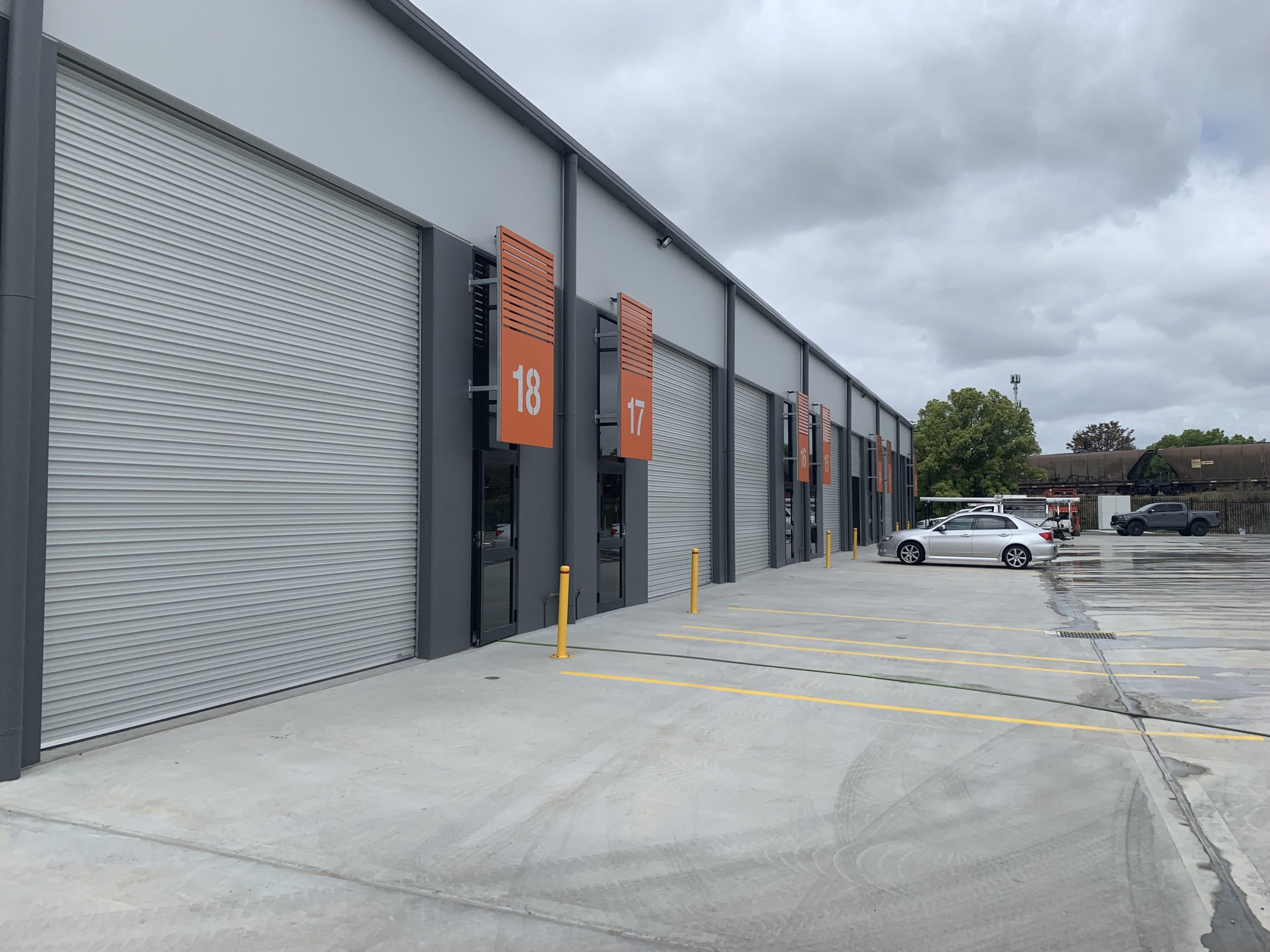
Callum ran a precision engineering business in Dandenong South for a decade, turning over $3.6 million a year with an EBITDA consistently above $480,000. Good numbers, loyal clients, solid reputation. However, every year brought the same frustration — another rent review, another increase, and another reminder that none of it was building his wealth.
By the time he came to us, Callum's annual rent had climbed to $168,000 — up 35% in five years. His landlord had just flagged a further increase tied to the next market review. At that point, Callum decided he was done paying someone else's mortgage and wanted to explore buying his own premises.
The Challenge
The problem was that Callum had already spoken to his bank. In fact, they'd told him they could "probably do something" but came back with a 15-year term, annual rate reviews, and a rate above 8.5%. On top of that, they wanted a personal guarantee over his family home and would only lend to 65% LVR — meaning Callum needed nearly $1 million in cash for the deposit alone. As a result, he assumed buying was out of reach and nearly shelved the idea entirely.
What We Did Differently
After reviewing Callum's financials, we identified several strengths his bank had completely overlooked. First, his 10 years of continuous rent payments at the same address demonstrated clear serviceability — effectively proving he could comfortably manage loan repayments of a similar amount. Additionally, his business had maintained strong profitability through multiple economic cycles, which is exactly the track record specialist commercial property lenders look for.
We submitted his application to three lenders simultaneously from our panel of 60+ specialist commercial lenders. Within two weeks, we had two formal approvals on the table. The winning offer came from a non-bank lender with strong appetite for Melbourne's south-east industrial corridor. They approved a 25-year commercial property purchase loan at 6.75% with 80% LVR — significantly better than his bank's offer on every metric. Because Callum had been saving steadily and had equity in his home, we structured the deposit using a combination of cash savings and a small top-up on his residential mortgage, keeping his owner-occupier commercial loan clean and straightforward.
The Outcome
The numbers told the story. Callum's monthly loan repayment came to approximately $16,200 — roughly $2,800 less per month than his new rent would have been. Furthermore, instead of that money disappearing into his landlord's pocket, every single repayment was now building equity in his own asset. We projected that after 10 years of principal and interest repayments, Callum would build approximately $1.1 million in equity through loan reduction alone — and that figure doesn't account for any property value growth.
In reality, the result exceeded even our projections. Twelve months after settlement, comparable industrial units in Dandenong South had increased in value by roughly 7%, putting Callum's property at an estimated $3 million. Above all, what Callum valued most wasn't the financial return — it was the certainty. No more rent reviews, no more worrying about lease renewals, and complete freedom to fit out the workshop exactly the way his business needed it.
"I wish I'd done it five years ago. The rent I paid over that decade — I try not to think about it. But at least now, every dollar goes into something that's actually mine."
Client details have been anonymised. This story reflects a real scenario arranged through Smart Business Plans. Individual results vary depending on circumstances, lender criteria, and market conditions. Smart Business Plans are Authorised Representatives of Loan Market Services Pty Ltd (ACL 517192).
Benefits of working with us
Strong Applications
We'll work with you to develop a strong application profile, improving your chances of a successful application. We'll also call out any issues or gaps early. Your business plan and cash flow projections are also include
Best Possible Terms
We compare multiple lenders and present suitable options from our extensive development finance lender panel. We consider loan features like rates & terms, payment flexibility and approval timeframes.
Avoid Mistakes
We help you avoid the common mistakes people make every day. From getting stuck with high rates to having loan applications rejected because the information wasn't structured the right way for the lender.
Frequently asked questions
What's the difference between an owner-occupier and investment commercial property loan?
Owner-occupier loans are specifically designed for businesses buying premises they’ll operate from — meaning you or your business must occupy at least 51% of the lettable area. Because lenders consider owner-occupiers lower risk than investors, you’ll generally receive better terms across the board.
In practice, the key differences are significant. Owner-occupier rates typically start from 5.95% – 10.05% p.a., compared to 6.10% p.a. for investment loans — a saving of 0.5–1.5% that can translate to $10,000–$30,000 per year on a $2 million loan. Additionally, you can borrow up to 85% LVR as an owner-occupier versus around 70% for investors, which means a smaller deposit requirement. Furthermore, loan terms of up to 25–30 years are available, compared to the shorter terms many lenders offer for investment commercial property.
How much deposit do I need to buy my business premises?
Most owner-occupiers need between 15% – 30% of the property value as a deposit, plus costs such as stamp duty, legal fees, and valuation. For example, if you’re purchasing a $1 million property, you’d typically need $150,000–$300,000 for the deposit plus approximately $40,000–$80,000 for associated costs.
However, the exact amount depends on your circumstances. Businesses with strong financials — particularly those with 2+ years of profitable trading — are more likely to qualify for the higher LVR brackets (up to 85%), which reduces the deposit needed. Conversely, newer businesses or those with complex financials may need a larger deposit of 25–30%. That’s precisely why working with a specialist commercial property finance broker matters — we present your business in the way lenders want to see it, giving you the best chance of securing a premium LVR. As a general rule, we recommend budgeting 25–30% of the purchase price for your total upfront cash requirement including all costs.
How much of the property must my business occupy to qualify for owner-occupier rates?
Most lenders require your business to occupy at least 51% of the property’s lettable area. For instance, if you’re buying a 1,000sqm building, your business needs to use a minimum of 510sqm. In some cases, the threshold is based on rental value rather than floor area — so if you occupy the ground floor retail space worth more than the upstairs office you lease out, you may still qualify even if the floor area split is close.
Importantly, you’re generally allowed to lease out the remaining space to other tenants. In fact, many of our clients do exactly this because the rental income from the unleased portion actually strengthens your loan serviceability. As a result, buying a slightly larger property than you currently need — and leasing the surplus — can sometimes make it easier to get approved, not harder. We can help you structure this correctly during the application process.
Can a newer business qualify for an owner-occupier commercial loan?
Yes, although the terms will differ from what an established business with 2+ years of trading history would receive. In our experience, newer businesses typically face higher interest rates (often 0.5–1.0% above standard owner-occupier rates), lower maximum LVRs of around 65–75%, and stricter documentation requirements.
Specifically, lenders for newer businesses want to see a strong deposit (typically 25–30%), a detailed business plan with realistic cash flow projections, personal guarantees from the directors, and evidence of relevant industry experience. Some lenders also look favourably on businesses that can demonstrate existing revenue — even if trading history is under two years.
The key difference when working with us is access. Most newer businesses approach their own bank and get declined, then assume they can’t borrow. However, across our panel of 60+ specialist lenders, several have specific appetite for newer businesses in certain industries. For example, medical and allied health practices can often secure competitive terms even in their first two years of trading because lenders understand the revenue predictability of healthcare.
Should I choose Principal & Interest or Interest Only repayments?
Most of our owner-occupier clients choose principal and interest (P&I) repayments, and in most cases we agree that’s the right approach. With P&I, you’re building equity from day one, the total interest cost over the life of the loan is significantly lower, and there’s no refinancing pressure when an interest-only period expires.
That said, interest only can make sense in specific situations. For instance, if you’re planning to renovate or fit out the property immediately after purchase, an initial interest-only period of 1–3 years keeps your cash flow available for those works. Similarly, businesses with strong seasonal revenue patterns sometimes prefer interest only during quieter months.
However, it’s important to understand the trade-offs. Interest-only loans typically attract a rate premium of 0.1–0.3%, and you’re not reducing the principal balance during that period — which means your equity growth relies entirely on property value increases. Above all, many business owners underestimate the payment jump when the interest-only period ends and P&I repayments begin. We always model both scenarios so you can see the long-term cost difference before making a decision.
What property types qualify for owner-occupier commercial loans?
Most standard commercial property types qualify for owner-occupier finance, including offices and professional suites, warehouses and industrial units, retail shops and showrooms, medical and allied health premises, and mixed-use properties with a commercial component.
In addition, specialist property types such as childcare centres, gyms, veterinary clinics, and automotive workshops can also be financed — although these typically require lenders with specific sector expertise. For instance, a childcare centre may need a lender who understands the regulatory environment and revenue model of that industry.
It’s worth noting that certain property types may attract different LVR limits or rate premiums depending on how the lender classifies them. As an example, a standalone warehouse in a well-established industrial estate will generally receive more favourable terms than a specialised single-use property. That’s one of the reasons we compare across 60+ lenders — each has different appetite for different property types.
Can I buy a strata-titled commercial unit instead of a whole building?
Yes, and strata units are often an excellent entry point for smaller businesses and professional services firms. The benefits include a lower purchase price compared to a freestanding building, shared maintenance costs through strata levies, and the ability to own your premises without taking on the responsibility of an entire building.
However, there are some important considerations before proceeding. First, check the strata by-laws carefully for any restrictions on your type of business use — some strata schemes limit trading hours, signage, or specific activities. Additionally, strata levies can vary significantly between buildings, so factor these into your total occupancy cost when comparing ownership to renting. Furthermore, some lenders apply a slightly lower maximum LVR for strata-titled commercial units compared to freestanding properties, particularly for very small units under 50sqm.
In our experience, strata units work particularly well for accountants, financial planners, allied health practitioners, and other professional services where the space requirements are modest but having a permanent, owned address adds significant credibility to the practice.
How does owning compare financially to renting long-term?
In our experience, most owner-occupiers find that owning becomes financially superior to renting within 5–7 years — and the gap widens significantly from there. The reason is straightforward: loan repayments on a fixed or P&I basis remain relatively stable over time, whereas commercial rents typically increase by 3–4% annually through structured reviews.
To illustrate, consider a business currently paying $100,000 per year in rent with annual 3% increases. Over 10 years, that’s approximately $1.15 million in rent paid — none of which builds any equity. By contrast, an owner-occupier with similar monthly outgoings would have built somewhere between $500,000 and $1.5 million in equity over the same period through a combination of principal reduction and property value growth.
Moreover, once the loan is fully repaid (typically in 20–25 years), your occupancy costs drop dramatically — you’re only paying rates, insurance, and maintenance. Meanwhile, a renter in the same period would have seen their rent roughly double. Above all, the equity you build in commercial property becomes a powerful financial tool — you can borrow against it for business expansion through a commercial refinance, use it as security for additional investments, or realise it when you eventually sell the business or retire.
What if property values fall after I purchase?
This is one of the most common concerns we hear, and it’s understandable because it could happen. However, owner-occupiers are fundamentally less exposed to property value fluctuations than investors for several important reasons.
First, your loan repayments don’t change based on the property’s current market value — they stay the same regardless. Additionally, because you’re using the property for your own business, you’re not dependent on rental income to service the debt. As a result, even if the property temporarily drops in value, your day-to-day business operations and loan obligations are unaffected.
It’s also worth considering the broader picture. Australian commercial property has historically recovered well from downturns, particularly well-located industrial and office assets in established areas. Furthermore, as an owner-occupier, you’re still saving money compared to renting — and you continue to build equity through every P&I repayment even when values are flat. In the long run, most owner-occupiers hold their property for 10–20+ years, which provides ample time for any short-term dips to recover. The risk is significantly greater for short-term speculators than for business owners using the property as a genuine long-term operational asset.
Should I buy business premises directly or through my Self-Managed Super Fund?
Both approaches have genuine advantages, and the right choice depends on your specific circumstances, tax position, and long-term plans.
Buying through your business directly gives you immediate control and simpler financing. Interest on the loan is tax-deductible as a business expense, and the application process is generally more straightforward. You also have complete flexibility to renovate, extend, or modify the property without the regulatory constraints that apply to SMSF-held assets.
On the other hand, purchasing through a Self-Managed Super Fund can be significantly more tax-effective over the long term because your SMSF pays tax at just 15% on rental income (and potentially 10% on capital gains if held for over 12 months). In addition, the property is protected from business creditors — an important consideration for industries with higher liability exposure. However, SMSF purchases come with stricter borrowing rules, lower maximum LVRs, and the requirement that your super balance is sufficient for the deposit.
Many of our clients choose a hybrid approach — buying through their SMSF and leasing the property back to their business at market rent. In effect, the rent you pay your own super fund builds your retirement wealth while remaining a deductible business expense. This strategy works particularly well for established business owners with substantial super balances.
As specialist commercial property finance brokers, we can model both scenarios side by side so you can see the actual dollar difference over 10, 15, and 20 years before deciding.