
Home » Commercial Property Market » Melbourne
Melbourne Commercial Property Market
Quarterly market insight on Melbourne commercial property — vacancy rates, yields, precinct conditions, deal flow and more.

Current market conditions in Melbourne
Jan - Mar 2026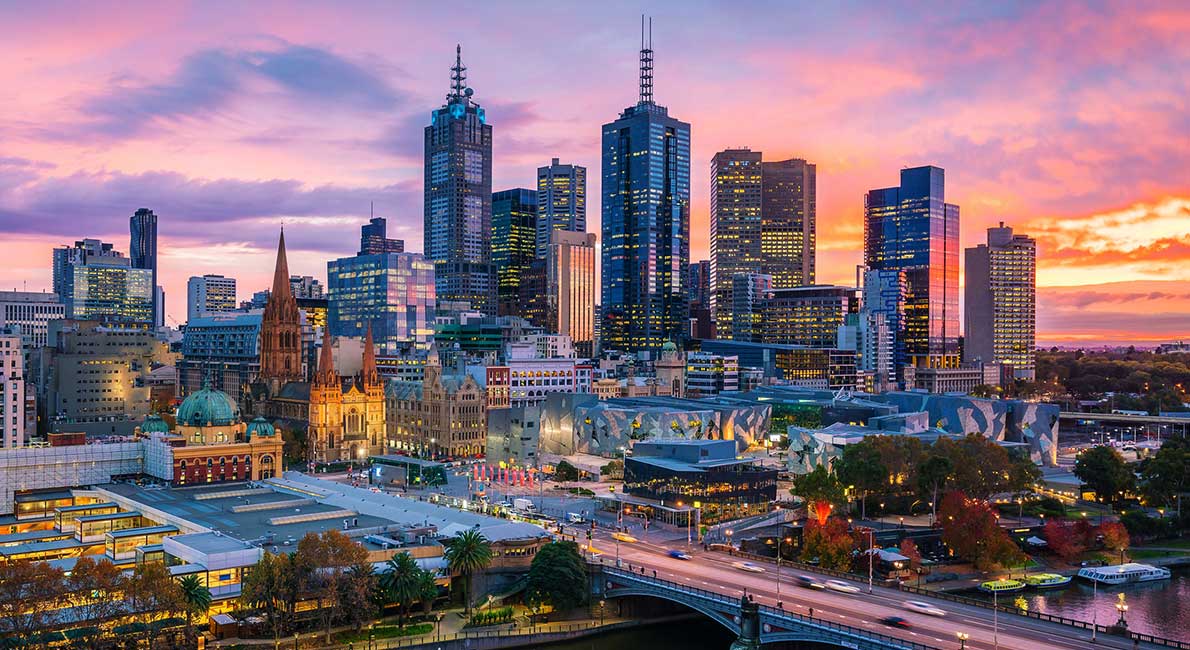
The headline that follows Melbourne everywhere right now is the 19% CBD office vacancy rate — the highest in Australia and the highest since 1997. What that number doesn’t tell you is that the Eastern Core and city fringe are performing like a different market altogether. Cremorne, Fitzroy and Collingwood are recording consistent leasing activity, rent growth is outstripping the CBD, and Knight Frank has named Cremorne as an office hotspot for 2026. If your asset is in the right precinct, the headline vacancy figure is largely irrelevant to how lenders and buyers are treating it.
Industrial remains the standout sector. The South East corridor — Dandenong, Clayton, Moorabbin — is Melbourne’s tightest industrial sub-market at around 3.5% vacancy, and owner-occupier demand across all Melbourne precincts is the most consistent source of approvals I’m seeing. The West and North carry more speculative supply right now, which shows up in lender scrutiny for investment product — but owner-occupier applications in those precincts are still processing well. Medical and essential services assets in suburban Melbourne continue to be among the most bankable commercial property types in any market condition.
Melbourne vacancy rates
CBD office & industrial — the two most actively tracked sectors for Melbourne commercial property investors.
Vacancy rates are the leading indicator for where rents and yields are heading next. In Melbourne’s commercial market, the two sectors that move independently of each other — and tell very different stories — are CBD office and industrial logistics. The headline office vacancy figure masks a stark split between prime and secondary stock that every buyer and lender is now pricing separately.
Vacancy data sourced from Property Council of Australia Office Market Report (CBD office, 6-monthly) and CBRE Industrial & Logistics Report H2 2025 (industrial, half-yearly). Broker commentary represents personal observations from active commercial finance transactions and does not constitute investment advice.
Melbourne commercial property market pulse
Jan - Mar 2026How each sector is performing shapes who’s buying, at what price, and on what terms. These observations come primarily from active Melbourne transactions by Nadine Connell
Broker observations — Nadine Connell, Smart Business Plans · smartbusinessplans.com.au
Melbourne’s tightest industrial sub-market. Dandenong, Clayton and Moorabbin sitting near 3.5% vacancy means genuine lender competition for well-located assets. Owner-occupier demand is particularly strong here — the cleanest finance category in Melbourne right now.
Defensive income, long lease terms and CPI-linked reviews make suburban Melbourne medical one of the most consistently bankable property types in the country. Strong SMSF owner-occupier activity in Brunswick, Preston and Moorabbin.
JLL recorded Melbourne sub-regional yield compression of 25 bps and neighbourhood 12.5 bps in Q4 2025. LFR rents grew 4.47% year-on-year. Well-located strip retail with strong tenancy covenants is attracting mainstream lender support.
Speculative supply has pushed West and North vacancy above 5%, and lenders are examining lease terms and covenant strength more carefully for investment product. Established assets with strong covenants are getting done — this precinct rewards careful lender matching.
Cremorne and Richmond are outperforming the wider Melbourne office market — Knight Frank named Cremorne a top office hotspot for 2026. Lender appetite for well-tenanted fringe office is solid, though mixed-use strata valuations require careful structuring.
At 19% vacancy, Melbourne CBD office is the most scrutinised sector. Prime and A-grade assets in the Eastern Core are getting done — secondary CBD stock and Docklands require careful lender matching, realistic valuations and stronger equity positions.
For lending rates, LVR ranges and lender panel detail by sector, see our Melbourne commercial property loans page.
Melbourne commercial property yields & cap rates
Broker-observed yield midpoints across five sectors — reviewed and updated each quarter.
Yields reflect the income return on a commercial property relative to its purchase price. These figures are broker-observed midpoints from active Melbourne transactions — they represent the range where the majority of deals are transacting, not the absolute limits of what the market can produce.
Broker-observed midpoints — Nadine Connell, Smart Business Plans · smartbusinessplans.com.au
The spread between Melbourne’s CBD secondary office yields and every other sector tells you everything about where the risk is priced right now. Secondary CBD and Docklands at 7.50%–9.50% is not a yield story — it is a risk premium. Lenders are reading that signal clearly: smaller pools, tighter LVRs, more scrutiny. Prime and Eastern Core assets are a different proposition, and Knight Frank has been explicit that the pricing window for patient buyers in that category may not stay open much longer as supply tightens from 2027.
Industrial South East continues to be Melbourne’s most consistently fundable commercial property category. Yields at 5.25%–6.00% reflect genuine competition at 3.5% vacancy — lenders are comfortable here because the occupier market supports the income. Neighbourhood retail compressing 12.5–25 basis points in Q4 2025 is the sector to watch: that kind of movement in a single quarter signals genuine re-rating, not just isolated transactions.
Yield figures represent broker-observed midpoints from active commercial finance transactions in Melbourne and are directional indicators only — not a statistical index. Individual asset yields vary based on location, lease terms, tenant covenant, building grade and other factors. This data does not constitute financial or investment advice. Always obtain independent valuation and professional advice before making any property investment decision.
Melbourne commercial property market by precinct
Jan - Mar 2026Melbourne is not a single commercial market. Conditions in the South East industrial corridor are fundamentally different from the CBD, city fringe or inner north — and those differences shape what lenders will do, what valuers will find, and what your asset is worth. Select a precinct below for current market conditions. For LVR ranges and lender panel detail, see our Melbourne commercial property loans page.
CBD & Docklands
Selective
Office
The 19% headline figure is real, but it doesn’t tell you the full story. The Eastern Core — Collins Street, Bourke Street corridor, prime A-grade towers — is leasing actively and holding values well. What’s generating the headline number is secondary towers and Docklands stock, where tenant demand has not kept pace with the supply delivered over the past two years. For lenders, that distinction is now explicit at credit assessment: prime product in the right precinct is a completely different conversation from secondary CBD.
Docklands in particular is carrying elevated vacancy and incentive packages that are not easing quickly. For buyers approaching that sub-precinct, I’d specifically say: lender pool is narrower, valuers are cautious, and building in a genuine equity buffer is not just prudent — it’s necessary. For prime CBD office with committed tenants, competitive conditions still exist. For Docklands and secondary stock, get lender selection right before you exchange.
City Fringe
Improving
Office & mixed-use — Cremorne · Richmond · Collingwood · Fitzroy
The most significant outperformance story in the Melbourne commercial market right now. Cremorne and Richmond are running at vacancy levels the CBD hasn’t seen in years, and rent growth here is outpacing the CBD. Knight Frank named Cremorne one of Australia’s top five office hotspots for 2026, and I’m seeing that reflected directly in lender appetite — confidence in this precinct is materially higher than it was 18 months ago.
Collingwood and Fitzroy are part of the same city fringe story, particularly for technology, creative and professional services tenants. The mixed-use conversion dynamic — older industrial buildings repurposed for commercial and retail use — creates valuation complexity that requires careful lender matching. A well-tenanted fringe office building and a converted mixed-use strata are not the same credit proposition even if they share a postcode. If your asset is in Cremorne or Richmond with a strong tenant, lender competition is genuinely available. Mixed-use conversions require more structuring work.
Southbank & South Melbourne
Selective
Office strata & SMSF
Southbank sits at the intersection of CBD office and residential, and that boundary matters considerably for how lenders assess assets here. Commercial strata in professional services use — particularly for medical and allied health practitioners — is attracting solid SMSF owner-occupier demand, and that’s where lender appetite is most consistent. The key question on every Southbank strata submission is the commercial use dominance test: lenders distinguish carefully between predominantly commercial and predominantly residential floor plates.
South Melbourne offers a different dynamic — stronger owner-occupier activity in professional services and medical, generally better valuation support, and more consistent lender appetite than Southbank proper. For SMSF purchasers in this precinct buying a professional suite or medical space, outcomes are generally solid. For mixed residential-commercial strata, the lender pool is narrower and specialist lender matching is essential.
West Melbourne Industrial
Improving
Industrial & logistics — Laverton · Truganina · Derrimut · Altona
Australia’s primary logistics corridor linked to the Port of Melbourne. The West precinct has seen significant speculative supply completions over 2024–25, which has pushed vacancy to around 5.3% and elevated incentive packages across the sub-market. That said, long-term demand fundamentals here are sound: Port-linked distribution, e-commerce fulfilment, and manufacturing operators continue to absorb space, and CBRE’s forward view is for vacancy to tighten from 2026 as the new supply pipeline slows materially.
For lenders, the bifurcation is clear. Owner-occupier demand in Truganina, Derrimut and Laverton remains strong and is processing consistently well across my panel. For investment product, lease covenant and remaining WALE matter considerably more than they did 18 months ago — lenders are applying that scrutiny directly to LVR decisions. Owner-occupiers in this precinct are being well-served. For investment acquisitions, bring a lease summary and focus lender selection early — the difference in outcome between the right lender and the wrong one is meaningful here.
Inner North
Strong
Medical, professional & light industrial — Brunswick · Preston · Coburg
Brunswick and Preston are among Melbourne’s most consistently active precincts for SMSF commercial property purchases, and I see that in the volume of enquiries I receive for these postcodes. Medical suites, dental practices, allied health premises, and professional services offices here are attracting mainstream lender appetite at competitive LVRs. The CPI-linked lease structures common in healthcare commercial property provide the income security that lenders and valuers respond to most positively.
Light industrial in Brunswick has benefited from the creative and artisan economy that’s embedded in the precinct — owner-occupier purchasers are not just competing against investors here, they’re often outbidding them. The Melbourne Metro Tunnel opening reinforces the longer-term accessibility story for this corridor. Of all Melbourne precincts, Inner North is where I see the most consistent finance outcomes across multiple asset types — medical, professional services and light industrial all processing well with minimal friction from my panel.
South East Industrial
Strong
Industrial & owner-occupier — Dandenong · Clayton · Moorabbin · Braeside
The South East corridor is the cleanest finance category I work in across the entire Melbourne market. At around 3.5% vacancy, this is one of the tightest established industrial sub-markets on the east coast — significantly tighter than the Melbourne average of 4.7% and well below the 4% equilibrium threshold. The combination of geographic access via EastLink and the Dingley Bypass, established manufacturing and distribution tenancy, and limited new speculative supply creates the conditions that both lenders and valuers respond to most confidently.
Owner-occupier demand is the dominant driver of transaction volumes here. Manufacturing operators, trade businesses and distribution companies are actively acquiring premises rather than renewing leases, particularly in the $1M–$4M range. Investment assets with strong lease covenants are also achieving competitive LVRs from multiple lenders on my panel simultaneously. This is where I consistently see the fewest credit surprises of any Melbourne commercial precinct — when the asset is right, the lender competition is real and the outcomes reflect it.
Precinct observations represent Nadine Connell’s personal experience from active commercial finance transactions. Reviewed Jan - Mar 2026. Not financial or investment advice. · View lending criteria and LVR ranges by precinct →
Melbourne development pipeline
Major projects shaping Melbourne’s commercial property landscape through to 2030. Click any pin for project detail.
Infrastructure
✓ Complete
Melbourne Metro Tunnel
CBD to South East · Opened 2025
Five new underground stations linking Sunbury and Cranbourne/Pakenham lines through the CBD. Stations at Arden, Parkville, CBD North, CBD South and Domain. Significant accessibility uplift for inner north and south east precincts, reinforcing long-term commercial demand in Brunswick, Fitzroy, and South Yarra. The $11B project is the largest infrastructure investment in Victoria’s history.
Infrastructure
● Delivering
West Gate Tunnel
West Melbourne · Delivering 2025–2026
Major freeway project linking CityLink to the Western Ring Road, bypassing the West Gate Bridge for heavy freight. Significant impact on logistics efficiency for the Laverton, Truganina and Altona industrial corridor. Reduces travel time for freight from Port of Melbourne to outer western warehousing precincts — reinforcing the long-term investment case for West Melbourne industrial.
Office
● Leasing
Collins Arch (447 Collins Street)
Melbourne CBD · 2 towers · ~88,000 sqm NLA
Premium mixed-use development delivered to market. Part of the new premium CBD supply that has contributed to headline vacancy, but is attracting the flight-to-quality tenant demand that characterises Melbourne’s prime office market. Demonstrates the bifurcation between premium product and secondary CBD stock in the current market.
Mixed-use
● Delivering
Arden Urban Renewal Precinct
North Melbourne · Metro Tunnel station precinct
Major urban renewal precinct around the new Arden Metro Tunnel station in North Melbourne. Planned for 15,000 new dwellings and 34,000 jobs over 30 years. The commercial and mixed-use components represent a significant long-term opportunity, with the Metro Tunnel station as the anchor for the entire precinct’s viability. Ground-floor commercial and mixed-use in this precinct is already attracting developer and investor interest.
Industrial
● Delivering
Westpark Industrial Estate (Truganina)
West Melbourne · 2024–2026
Large-format logistics and warehousing estate in Melbourne’s primary western industrial corridor. Part of the speculative supply wave that has elevated West Melbourne vacancy to ~5.3% in Q4 2025. As the new pipeline slows from 2026, CBRE forecasts this type of supply will be absorbed without significant further vacancy escalation. Owner-occupier demand from manufacturing, food processing and logistics operators continues to be the primary demand driver in this precinct.
Infrastructure
○ 2028–2034
North East Link
North East Melbourne · $26B · 16km tunnel
Closing the missing link in Melbourne’s freeway network between the Eastern Freeway and Ring Road. Will reduce freight travel times between the South East industrial corridor (Dandenong, Clayton, Moorabbin) and the northern and western logistics precincts. Significant commercial property benefit anticipated for the Bulleen Road corridor and surrounding industrial land. Already influencing investor interest in adjacent commercial precincts.
Infrastructure
○ 2035+
Suburban Rail Loop (East)
Cheltenham to Box Hill · $34.5B · 6 stations
Orbital rail connection linking suburban activity centres without travelling through the CBD. Stations at Cheltenham, Clayton, Monash, Glen Waverley, Burwood and Box Hill. The Clayton station — adjacent to Monash University and the Clayton industrial precinct — will be transformative for the South East corridor’s long-term commercial appeal. While the timeline is long, investor awareness of the catchment uplift is already influencing how the South East is priced relative to other Melbourne industrial precincts.
Mixed-use
○ 2026–2030
Docklands Renewal — Stage 2
Docklands · Multiple precinct activations
Ongoing precinct activation programme addressing the primary occupier criticism of Docklands — limited street-level retail, hospitality and amenity. While Docklands office vacancy remains elevated, the continued investment in ground-floor activation is a genuine medium-term factor in its recovery. From a finance perspective, the distinction between Docklands and the Eastern Core remains pronounced, and lenders are pricing that distinction directly.
Project details and completion dates sourced from publicly available developer, government and industry announcements. Figures are estimated targets subject to change. Not financial or investment advice.
Melbourne deal flow & valuations
Jan - Mar 2026Where transactions are happening
Transaction activity in the sub-$5M Melbourne commercial market has been building consistently through 2026, and the segment I’m seeing move first is the $1M to $3M range in medical, professional services and South East industrial. These are buyers who have been watching and waiting, and the combination of lower borrowing costs and a clear window before Melbourne’s supply pipeline slows is giving them the confidence to move. In my experience, when that cohort starts moving together, it tends to sustain for a while.
Investment activity is more selective, and the quality split is as pronounced as anywhere in the country right now. A well-leased city fringe building in Cremorne and a secondary tower in Docklands are genuinely different propositions for lenders, buyers and valuers. Neighbourhood retail with strong anchor tenants is recording improved appetite after years of caution. Industrial in the South East continues to be the most consistently active investment category on my panel. When the asset and location are right, I’m regularly seeing genuine competition from multiple lenders at the same time, which hasn’t always been the case over the past 18 months.
Valuation watch
Valuations are the most consequential variable in Melbourne commercial finance right now, particularly in the office sector. The distance between a vendor’s price expectation and a lender’s valuation can be significant, and I’d rather have that conversation with a buyer before they sign a contract than after. Understanding the valuation environment for your specific asset type and precinct is not optional in Melbourne’s current market.
Valuations are routinely coming in short. At 19% overall CBD vacancy, valuers are applying significant caution to anything that is not prime. Build in a genuine equity buffer, not just the minimum deposit.
Residential-commercial boundary assets require careful lender matching. Valuers distinguish sharply between commercial-dominant and residential-dominant floor plates. Expect scrutiny and, in some cases, LVR compression.
Valuations are tracking at or above purchase price on well-located assets. Strong comparable sales evidence in this corridor means minimal shortfall risk for functional assets in established precincts.
Valuer confidence in suburban medical assets across Brunswick, Preston and Moorabbin remains high. Market evidence is consistent and supportive. SMSF purchases in this category are processing particularly well across my panel.
Melbourne commercial property — frequently asked questions
Questions I answer regularly from clients approaching the Melbourne market for the first time, or returning after time away from commercial property.
What is the current Melbourne CBD office vacancy rate?
The current figure is in the vacancy tracker above, sourced from the Property Council of Australia Office Market Report. As at January 2026, Melbourne CBD office vacancy sits at 19%. That is the highest in Australia and the highest since 1997. However, that headline number is doing a lot of heavy lifting, and it is worth understanding what is behind it before drawing any conclusions about the market.
The vacancy is not evenly distributed. The Eastern Core, including the Collins Street and Bourke Street corridor and prime A-grade stock, is leasing consistently. Knight Frank specifically named Cremorne and the city fringe as among the strongest performing office precincts in Australia for 2026. The 19% figure is primarily driven by secondary CBD towers and Docklands product, where supply has run ahead of demand and incentive packages remain elevated.
In practice, lenders are now treating Melbourne office as two separate markets: prime Eastern Core product, where competitive lending conditions still exist, and secondary CBD or Docklands stock, where the pool is narrower and LVR expectations need to be reset before you exchange. Understanding which category your asset falls into, before you commit, is one of the most important conversations you can have with your broker.
What are typical commercial property yields in Melbourne?
Current sector-by-sector yield ranges are in the yields tracker above, reviewed quarterly from my active Melbourne transaction panel. As a starting point, Melbourne yields are generally slightly wider than Sydney across equivalent asset classes. That spread reflects both the CBD office situation and a broader Melbourne valuation discount that has been running since the pandemic. For investors who can look through the current noise, Knight Frank has called Melbourne a compelling proposition for patient investors precisely because that pricing window does not stay open indefinitely.
Industrial in the South East is the tightest sector by yield, reflecting the sub-3.5% vacancy discussed throughout this page. Neighbourhood retail is actually compressing. JLL recorded yield tightening of 12.5 to 25 basis points in Q4 2025, which was the most meaningful single-quarter retail yield movement I have seen in some time. Medical and healthcare remains stable and defensively priced. CBD secondary office sits at the widest end of the range, and those wider yields are a risk signal, not a value signal. That matters for how lenders read the credit.
For lending purposes, it is worth knowing that lenders apply their own capitalisation rate assumptions in their valuation process. A deal that pencils out at the purchase price can fall over quickly if the lender’s panel valuer applies a wider cap rate. That gap is where a lot of Melbourne commercial finance transactions run into difficulty, and it is why understanding the valuation environment before signing a contract matters so much.
Why is Melbourne industrial vacancy rising when other cities are tightening?
Current Melbourne industrial vacancy figures are in the tracker above. The short answer is that Melbourne’s industrial vacancy rise is primarily a supply story, not a demand story. A significant wave of speculative warehouse completions hit the West and North precincts through 2024 and into 2025, pushing the overall Melbourne average to 4.7% as at H2 2025. Perth and Adelaide, sitting at 1.8% each, have had minimal speculative supply. Importantly, Melbourne’s overall average sits just above the 4% equilibrium threshold that CBRE uses nationally, but only just.
What makes Melbourne particularly interesting is the split between precincts. The South East corridor, covering Dandenong, Clayton and Moorabbin, is running at approximately 3.5% vacancy. That is tighter than the national average and considerably tighter than the Melbourne headline. The North precinct hit 8.6% in Q4 2025 following speculative completions. So when someone says Melbourne industrial vacancy is elevated, the useful follow-up question is: which precinct?
For finance, the precinct distinction matters directly. South East industrial processes easily across my panel and LVR outcomes are strong. West and North industrial requires more attention to lease covenant and WALE. Lenders are applying that scrutiny to credit decisions right now. Owner-occupiers in both precincts are generally well-served regardless, because owner-occupancy provides a covenant layer that investment-only deals do not have.
How does the Melbourne commercial property market compare to Sydney and Brisbane?
The most useful comparison right now is that Melbourne sits at a different point in its recovery cycle to Sydney and Brisbane. Sydney’s CBD office market is tighter, at 13.8% vacancy versus Melbourne’s 19%, but both are navigating an elevated supply environment. Brisbane has staged the strongest office recovery of any major Australian city, benefiting from its lower pre-cycle vacancy base and Queensland’s economic momentum. Melbourne has faced additional headwinds from the Victorian state government’s proposed work-from-home legislation, which has introduced investor uncertainty that neither Sydney nor Brisbane is dealing with to the same degree.
However, the comparison that matters most for investors is pricing. Precisely because Melbourne has lagged, commercial assets here are trading at more attractive pricing relative to underlying fundamentals than in Sydney. Knight Frank’s Australian Horizon 2026 report specifically called Melbourne a “darkest before dawn” proposition. The downside risk is now limited, new supply is slowing from 2027, and the entry window is genuine. That window will not last indefinitely.
From a finance perspective, Melbourne lenders maintain different appetite levels across precincts that are not visible on any rate sheet. Knowing which lenders have current appetite in city fringe office versus CBD secondary versus South East industrial, and which have pulled back, requires active panel knowledge rather than a rate comparison. That is a genuine advantage a specialist broker brings to Melbourne transactions right now.
What LVR can I get on a Melbourne commercial property?
Typical LVR ranges in Melbourne are 60 to 75% depending on asset type, borrower profile and lender. That is a wider band than people often expect, and the difference between 60% and 75% LVR on a $2.5M asset is $375,000 of equity. Getting lender selection right genuinely changes the outcome, not just the interest rate.
As a general rule, owner-occupiers consistently access the most favourable LVR terms, often reaching 70 to 75% across healthcare, professional services and industrial. South East industrial investment properties with strong lease covenants are achieving 65 to 70% LVR from multiple lenders simultaneously. Medical and suburban professional services are similarly well-supported. City fringe office in Cremorne and Richmond, when well-tenanted, is processed at competitive LVRs. Lender confidence in this precinct has improved materially over the past 12 months.
In contrast, CBD secondary office and Docklands strata is the most challenging sector for LVR right now. The lender pool is narrower, valuers are applying more conservative cap rates, and I am regularly seeing valuations come in short of the purchase price in this segment. If you are buying there, I would encourage you to build in a genuine equity buffer rather than just meeting a minimum deposit. For full LVR ranges by sector, see our Melbourne commercial property loans page.
Which Melbourne precincts are performing best for commercial property in 2026?
For office, the standout performers are the city fringe precincts: Cremorne, Richmond and Collingwood. Cremorne specifically has been named a top office hotspot for 2026 by Knight Frank, and the vacancy data backs that up. The precinct is running at around 3.8% vacancy while the overall CBD sits at 19%. Rent growth here is outstripping the CBD, tenant demand is active, and lender confidence has improved markedly. The broader city fringe story of technology, creative and professional services tenants choosing Fitzroy, Collingwood and Richmond over the CBD is well established and showing no signs of reversing.
For industrial, South East Melbourne is consistently the strongest precinct on my panel. Dandenong, Clayton and Moorabbin at approximately 3.5% vacancy means genuine lender competition for well-located assets. This is Melbourne’s equivalent of South Sydney infill: established demand, limited new supply and strong owner-occupier competition that underpins pricing even when broader industrial sentiment is mixed. Current vacancy figures for both sectors are in the tracker above.
On the other hand, Docklands and secondary CBD office remain the most challenging precincts for both lender appetite and valuation outcomes. Mixed-use strata on the Southbank residential-commercial boundary also requires careful lender matching. Medical and healthcare assets, however, perform well across virtually all Melbourne suburban precincts, particularly Brunswick, Preston and Moorabbin, due to strong tenant covenants, essential-service demand and consistent SMSF buyer competition.
What is the Melbourne commercial real estate investment outlook for 2026?
The most important thing to understand about Melbourne commercial real estate investment in 2026 is that you are buying at a point where the negatives are well-priced and the improving picture is not yet. That is a specific window of opportunity that does not always exist. The taxation headwinds, the WFH legislation uncertainty, the office vacancy headlines: all of those factors are already reflected in pricing. Meanwhile, new supply slows materially from 2027 across both office and industrial, and the rate-cut cycle is improving borrowing conditions for buyers.
For Melbourne industrial investment, the outlook is positive. South East vacancy is tight, West Melbourne is working through its speculative supply cycle with the peak expected in H2 2026, and CBRE’s forward view is for vacancy to tighten as supply slows. Retail has surprised on the upside nationally. Melbourne neighbourhood centres and LFR are showing genuine yield compression and rental growth that was not there 18 months ago. Medical and healthcare remains the most defensive commercial asset class in Melbourne and continues to attract both institutional and SMSF buyer competition.
Office investment is where patience matters most. The deals I am seeing transact are either prime city fringe assets with committed tenants or contrarian CBD plays where the buyer understands the recovery timeline and has the equity to hold through it. If you are buying Melbourne office as a yield story today, the numbers only work with careful asset selection and the right lender. Get finance terms confirmed before you commit to a price.
What are typical cap rates in Melbourne’s commercial property market?
Current sector-by-sector cap rate ranges are in the yield tracker above, reviewed quarterly from active transactions. Melbourne cap rates are generally wider than Sydney across equivalent asset classes. That spread is exactly what Knight Frank was pointing to when they called Melbourne attractively priced for 2026. Specifically, Melbourne CBD office prime is transacting at 6.00 to 7.25% versus Sydney prime at 5.50 to 6.75%. That difference is the Melbourne discount, and it narrows as the recovery progresses.
For industrial, Melbourne South East is trading at 5.25 to 6.00%, tight and well-supported by the vacancy data. Retail is compressing, as discussed in the market pulse section above. Medical and healthcare sits at a stable 5.50 to 6.75%, reflecting the defensive income profile and low vacancy risk that makes this asset class resilient to market cycles. CBD secondary office at 7.50 to 9.50% is the widest end of the range. Those wider yields represent a pricing adjustment for risk, not an income opportunity to be chased without understanding the underlying vacancy dynamics.
The critical thing to understand is that lenders apply their own cap rate assumptions as part of their valuation instruction. A property that works at an acquisition cap rate can become difficult to finance if the lender’s panel valuer applies 50 to 100 basis points wider in their assessment. This is one of the most common reasons Melbourne commercial finance falls over, particularly in the CBD office segment, and it is why understanding current valuation benchmarks before you sign a contract is essential.
Can I buy Melbourne commercial property through an SMSF?
Yes, and Melbourne is actually one of the more active SMSF commercial property markets in Australia. The depth of suburban medical and professional services precincts here is the primary reason. An SMSF can borrow to purchase commercial property using a limited recourse borrowing arrangement (LRBA), subject to the fund having adequate assets and the acquisition satisfying the sole purpose test and other compliance requirements. That structure is well-established in law and I work with specialist lenders for SMSF transactions regularly.
The advantage that most people do not fully appreciate until they have seen it in practice: your SMSF can lease the commercial premises directly to your own business at market rate. This is one of the very few related-party transactions explicitly permitted under superannuation law. Rather than paying rent to an external landlord, your business’s rental payments flow into your super fund instead. Over a 10 to 20 year hold, the tax treatment, at 15% on rental income in accumulation phase and potentially zero in pension phase, makes this an exceptionally efficient structure for Melbourne business owners in medical, professional services and light industrial who plan to own rather than rent their premises.
For Melbourne assets specifically, SMSF commercial property loans typically operate at 65 to 70% LVR, with lender appetite strongest in medical, dental, allied health, professional services offices and light industrial. Inner North Melbourne, covering Brunswick, Preston and Coburg, is the most active SMSF precinct I see in Victoria. Not all lenders on my panel offer SMSF lending and the documentation requirements are more involved than a standard commercial loan, so early conversation is essential. See our SMSF commercial property loans page for more detail.
What makes city fringe Melbourne different from the CBD for commercial finance?
They are fundamentally different finance propositions right now, and understanding that distinction before you make an offer could save you from a difficult outcome. Melbourne city fringe, covering Cremorne, Richmond, Collingwood and Fitzroy, is in a different credit conversation to the CBD. Vacancy in Cremorne is around 3.8%. Rent growth is outpacing the CBD. Lenders who have pulled back from secondary CBD exposure are actively lending in city fringe because the occupier market data supports it. Valuers are finding evidence. The deals are getting done at reasonable LVRs with mainstream lenders.
The CBD, specifically secondary CBD and Docklands, is carrying the weight of a 19% overall vacancy rate that lenders cannot ignore. Even where a specific asset is leased and generating income, the broader market context shapes how a valuer approaches their assessment and how a lender sets their credit position. That context is currently unfavourable for secondary CBD office in a way it is not for city fringe. Furthermore, mixed-use conversions in Collingwood and Fitzroy require careful lender matching because valuation methodology for these assets varies significantly across the panel.
The practical implication is this: two assets in nominally similar Melbourne inner-suburban locations can have very different lending outcomes depending on asset type, lease structure and which lender you approach. A well-tenanted Cremorne office building is not the same credit as a Docklands strata suite, and a Brunswick medical suite is not the same credit as a mixed-use Richmond conversion. The postcode alone tells you very little. If you are unsure where your target asset sits on that spectrum, that is precisely the conversation I would encourage you to have before proceeding.
Smart Business Plans Pty Ltd (CR553930) is an authorised credit representative of Loan Market Services Pty Ltd (ACL517192). Content is general information only and does not constitute financial product advice, investment advice or a credit assessment. Land Transfer Duty (commonly called stamp duty) applies in Victoria and rates differ from other states. Always obtain independent professional advice before making any commercial property decision.
Melbourne’s 19% CBD office vacancy is not one market — it is two. The Eastern Core and city fringe precincts like Cremorne and Fitzroy are leasing consistently, with Knight Frank naming Cremorne a top office hotspot for 2026. Secondary CBD towers and Docklands product are where the vacancy is concentrated, and that gap is widening. For buyers, prime assets in the right precincts are still getting clean finance outcomes. Secondary CBD stock requires a smaller lender pool, more equity and realistic valuation expectations baked in from the start.
Industrial vacancy at 4.7% sits above the 4% equilibrium threshold CBRE uses nationally — but the average obscures a market running at two different speeds. The South East corridor around Dandenong and Clayton is sitting near 3.5% and is the most competitive industrial finance category in Melbourne. The West and North precincts have more available space following speculative completions, which is showing up in incentives and lender scrutiny for investment product. Owner-occupier demand across all precincts remains the most consistent approval pathway.